Dr. Michael R. Furlanetto, Los Alamos National Laboratory
The Advanced Sources and Detectors (ASD)-Scorpius project is a collaboration between Los Alamos National Laboratory (LANL), Lawrence Livermore National Laboratory (LLNL), Sandia National Laboratories (SNL), and the Nevada National Security Sites (NNSS) to develop and build a multi-pulse kiloampere-class 22-MeV linear induction electron accelerator for dynamic x-radiography for national security purposes. The project has begun fabrication and assembly and is scheduled to become operational in the early 2030s. Notably, ASD-Scorpius uses a solid state pulsed power system to deliver an extremely flexible range of electron – and thus x-ray – pulses. Also, the location of the accelerator in a pre-existing mine deep underground in Nevada imposes significant design constraints.
The United States Department of Energy has tasked the National Nuclear Security Administration (NNSA) with ensuring the safety, security, reliability, and efficacy of the United States’ nuclear weapon stockpile. Since the U.S. ceased nuclear explosive testing in 1992, the NNSA has accomplished its mission through the Science-Based Stockpile Stewardship program, in which advanced experimental techniques are used to validate complex computer models that are used in turn to aid in the assessment and certification of the stockpile. As both the stewardship tools evolve and the geopolitical situation changes, new experimental needs arise. Recently, the NNSA has determined that it needs the ability to take a time series of x-radiographs of an imploding plutonium component. To do so, it has undertaken the Advanced Sources and Detectors (ASD)-Scorpius project.
Experimental work within the NNSA complex over the past several decades has shown that the most effective way to perform x-radiography at the relevant time-, length-, and density-scales is to use a Linear Induction Accelerator (LIA) to generate x-ray pulses through the bremsstrahlung process, and then use a fast gated camera to capture what are essentially pinhole radiographs of the evolving test object. Such LIAs exist at both Los Alamos National Laboratory (the Dual-Axis Radiographic Hydrodynamic Test facility, or DARHT) and Lawrence Livermore National Laboratory (the Flash X-Ray accelerator, or FXR), as well as at a number of other sites around the world. Both of these facilities use surrogate materials instead of plutonium; though such experiments provide important insights, their utility is limited by the need to extrapolate the material properties of the surrogates to plutonium. Instead, ASD-Scorpius will use subcritical quantities of plutonium – that will never sustain chain reactions – to gather relevant data.
The ASD-Scorpius accelerator is shown in Fig. 1. It will be a 22-MeV, 1.4-kA multi-pulse electron LIA. Physically, its design was constrained by its location at the Principle Underground Laboratory for Subcritical Experiments (PULSE) facility, a mine at the NNSS northwest of Las Vegas. The PULSE facility consists of several tunnels roughly 1000 feet underground. The U.S. conducts subcritical experiments at PULSE to ensure safety and security, and to take advantage of previously installed infrastructure. Because those tunnels – and the hoists accessing them – have finite dimensions, the accelerator had to be designed in volume- and mass-constrained modules. As a result, the entire accelerator will be ~125 meters long and will be collocated in the same tunnel with the pulsed power that drives it.
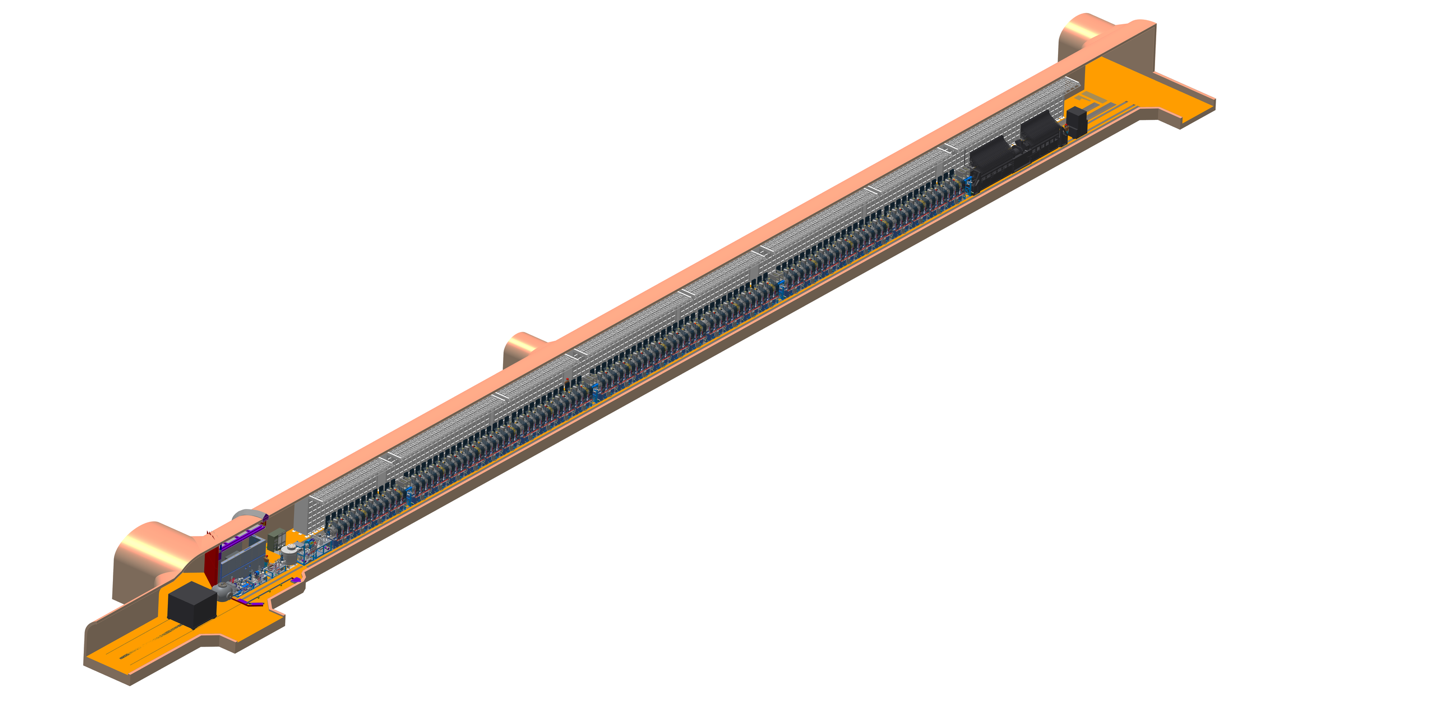
Figure 1: Rendering of the ASD-Scorpius accelerator in its underground location at the PULSE facility.
The other driving design features of LIAs used for flash x-radiography of explosively driven experiments are the characteristic scales of the experiments. High explosives move material at kilometers per second, so to achieve resolution of micrometers without significant blurring from the motion of the materials requires x-ray pulses that last only nanoseconds. The significant density of both the compressed metals being tested and the uncompressed metal shielding used to protect the facility requires high x-ray doses and, thus, electron pulse sizes. Both these characteristics drove the choice of a LIA to meet the experimental requirements.
The accelerator begins on the upper right of Fig. 1, where the injector sits. The injector was designed by SNL, with beam diagnostic support from LLNL. To fit within the available space, the injector adopted a push-pull inductive voltage adder (IVA) design. Up to four 1.4-kiloampere pulses of electrons are accelerated across a gap to ~2 MeV. Some beam shaping and control is done before the beam passes into the accelerator section.
The accelerator section was designed by LANL, drawing on their experience with the design and operation of the DARHT accelerators. It consists of roughly 100 accelerating cells, each of which increases the beam energy by ~200 keV, leading to a final beam energy around 22 MeV. This section also contains beam steering and focusing magnets, as well as diagnostics to measure beam dynamics and potential instabilities.
Both the injector and the accelerator are driven by a novel solid state pulsed power (SSPP) system designed by LLNL. The SSPP system consists of roughly 1000 individual units, each of which can deliver 25-kilovolt 5-kiloampere pulses on demand. This capability allows significant flexibility. Instead of creating multiple electron (and thus x-ray) pulses by accelerating one large pulse and then chopping out features of interest, ASD-Scorpius can accelerate multiple pulses independently, with their relative timings and duration set experiment-to-experiment by triggering the SSPP system at different times. This will be significantly more flexible than past LIAs, in which the pulse structure was essentially determined at their construction.
After the accelerating section, the electron pulses pass into the downstream transport (DST) region, also designed by LANL. This section contains safety equipment (to limit beam and radiation exposure to the accelerator hall during most modes of operation), machine protection equipment (to mitigate the effects of x-ray conversion on the rest of the accelerator), beam diagnostics, and the conversion target that produces the bremsstrahlung radiation.
The x-ray conversion targets are located immediately adjacent to a substantial containment barrier used to isolate the experimental assembly from the accelerator hall. The experiment is further confined within a steel vessel so that the blast and debris do not damage or contaminate diagnostic equipment. On the other side of the vessel is a scintillator/lens assembly that converts the x-rays to visible light, and then a fast and sensitive gated camera that records the ultimate data. This detector system was designed by LANL and NNSS, and benefits from the advanced sensor manufacturing techniques pioneered by MIT-Lincoln Laboratories.
Because the injector, accelerator, and SSPP systems are all novel designs, before we install them underground at the PULSE facility, we have set up an Integrated Test Stand (ITS) at a different NNSS facility. Here we will be able to test the integration between those three subsystems and the global controls system, demonstrate that ASD-Scorpius meets its performance requirements, and gain operational experience. Currently, components are being installed into that facility (shown in Fig. 2), and we plan to do subsystem and beam testing in 2026-2027.
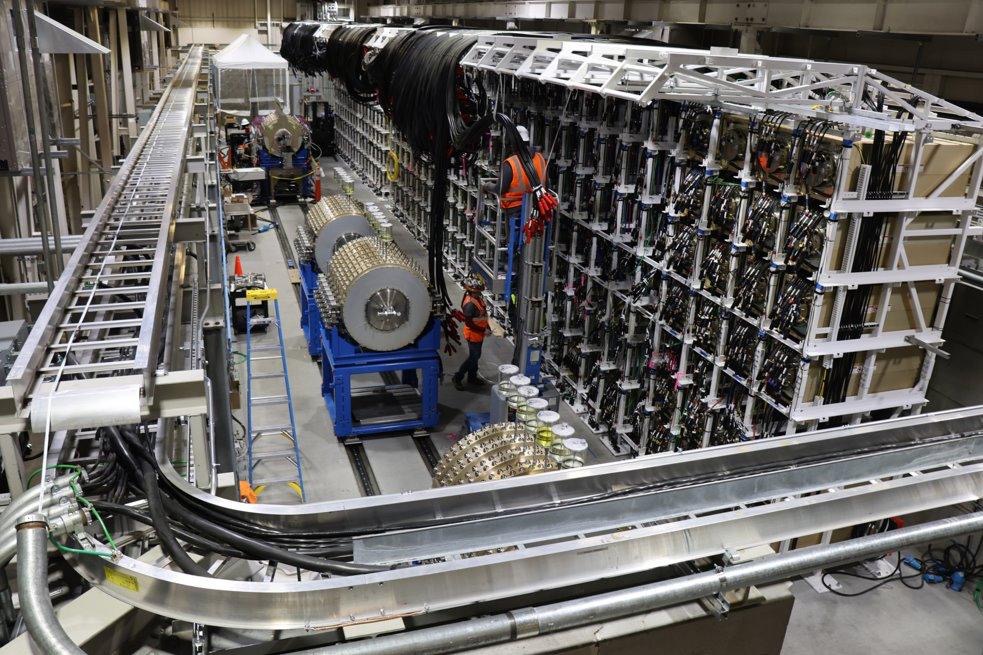
Figure 2: ASD-Scorpius injector and pulsed power components in the Integrated Test Stand.
After work at the ITS is complete, those components will be moved to PULSE and mated to the rest of the accelerator and DST systems, as well as the detector. We plan for that installation in 2027-2029, followed by commissioning and then experimental operations. The NNSA plans multiple subcritical experiments a year using ASD-Scorpius for the coming three decades. The resulting data will deepen our understanding of the U.S. nuclear weapons stockpile and will continue to ensure the safety, reliability, and efficacy of that stockpile.