Executive Committee

Committee Member Biographies

John Palmore, Past Chair

John Palmore

John Palmore Jr is an Assistant Professor in Mechanical Engineering at the University of Washington. His research group focuses on developing and testing numerical methods for simulating multiphase fluid flows. And the work applies this art to address engineering problems in the aerospace industry and in the environment. John joined the FECS committee as Chair-Elect in January 2024.


Daniel Marx, Chair

Daniel Marx

Daniel Marx is an early-career physicist working on the accelerator design of the future Electron-Ion Collider at Brookhaven National Laboratory (BNL). Originally from the UK, Daniel earned his MSci from Imperial College London in 2016. He then moved to Germany, where he conducted research in the Accelerator R&D group at DESY and received his doctorate in 2019 from the University of Hamburg. Daniel joined the FECS committee as Secretary in 2023 before moving over to the Chair-line in 2025.


Valentin Crepel, Chair-Elect

Valentin Crepel

Valentin Crepel is a theoretical physicist working at the interface of quantum materials and topological phases of matter. He has particular expertise in two-dimensional systems such as moiré heterostructures. His research explores how collective quantum behavior can give rise to new states of matter, including high-temperature superconductivity and topological order, with implications for quantum information and materials design.


Sonam Berwal, Treasurer

Sonam Berwal

Sonam Berwal is a researcher in optical sciences with a strong commitment to science communication, public engagement, and education. She recently submitted her Ph.D. dissertation in Optics at the Academy of Scientific and Innovative Research (AcSIR), CSIR-CSIO, India, under joint supervision with the University of Arizona, USA. Her doctoral research focused on freeform optics for solar-powered laser systems for space applications.


Linsey Rodenbach, Secretary

Linsey Rodenbach

Linsey Rodenbach is an early-career experimental physicist working as a Developer Relations Manager for Higher Education and Research on NVIDIA’s quantum computing team. Linsey received her PhD in Physics from Stanford University in 2023 for her research on applications of the quantum anomalous Hall effect in magnetic topological insulators to electrical metrology. At NVIDIA Linsey uses her background to help researchers around the world tackle challenges in quantum computing and meet their scientific goals. Linsey joined the FECS committee as Secretary in 2025.


Maria (Marilena) Longobardi, Councilor
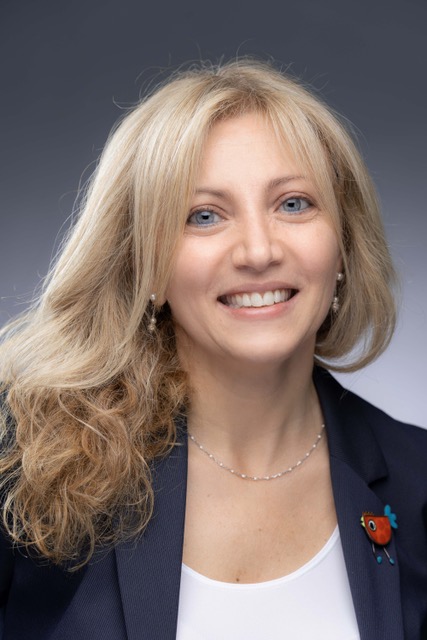
Maria (Marilena) Longobardi

Dr. Maria (Marilena) Longobardi is a quantum physicist and Executive Director of the National Centre of Competence in Research SPIN at the University of Basel, where she coordinates the scientific efforts in Quantum Computing with more than 30 research groups across academia and industry. She earned her PhD in quantum physics from the University of Salerno, with joint supervision at the University of California, Berkeley. Her research interests include low-dimensional quantum systems, electronic properties, semiconductors, superconductors, and magnetic systems. Marilena has extensive experience in international research, innovation management, and science diplomacy. An APS Fellow (2022) and founder of the Forum for Early Career Scientists (FECS), she has served in multiple leadership roles within APS, including her current position as Chair of the Forum on Industrial and Applied Physics (FIAP). She was recognized as an Inspiring Fifty in both Italy (2021) and the UK (2023) as one of the most inspiring women in Science and Technology. Marilena brings expertise in science management, community building, mentorship, talent development, and bridging gaps between academia, industry, and policy.


Franziska Treffert, Member-at-Large

Franziska Treffert

Franziska Treffert is a postdoctoral researcher at Lawrence Livermore National Laboratory in the HEDT group within the NIF & Photon Science division. Her work focuses on the development of laser-based secondary particle sources. She earned her PhD from Technische Universität Darmstadt in Germany in 2023 working on the development of high repetition-rate laser-driven fast neutron sources based on fast replenishing target systems such as cryogenic and liquid jets. She is an active member of APS serving as an APS Career Mentoring Fellow and is involved in outreach activities (SAGE and Fun With Science) at LLNL. Franziska joined the FECS committee in 2025.


Vidushi Adlakha, Member-at-Large

Vidusi Adlakha

Vidushi Adlakha is a postdoc at the STEM Education Innovation & Research Institute at Indiana University Indianapolis. She earned her Ph.D. in physics from the University of Houston in 2021. Her research examines how course structures in STEM disciplines impact students' collaborative experiences and beliefs about learning. This includes analyzing curriculum materials, activities, and grading policies to provide design principles for effective collaborative activities. She also investigates departmental support structures for women in STEM and their long-term interactions with these supports. Vidushi joined the FECS committee in 2025.


Kelly Luo, Member-at-Large

Kelly Luo

Kelly Luo is a Gabilan Assistant Professor of Physics and Astronomy at the University of Southern California (USC). Her ultrafast quantum opto-spintronics group at USC studies interactions between the quantum degrees of freedom in solid-state systems such as electron spins, photons, and magnons. She was previously a Presidential Postdoctoral Fellow and Honorary Kavli Fellow at Cornell University after receiving her Ph.D. in Physics at the Ohio State University in 2019. Kelly Joined the FECS committee as Member-at-Large in 2024.


Luis R. De Jesús Báez, Member-at-Large

Luis R. De Jesús Báez

Born and raised in Puerto Rico, Dr. Luis R. De Jesús Báez obtained his B.S. in chemistry from UPR-Cayey. From there, he worked for Prof. Banerjee to pursue his Ph.D. at TAMU where he focused on mapping electronic structure inhomogeneities and modeling spectroscopic signatures in cathodes. During this tenure, Luis accolades include the NSF-GRFP, the APS Robert S. Hyer Graduate Award, the IUPAC-Solvay International Award, and the 2019 ACS-Division of Inorganic Chemistry Young Investigator Award. He then worked for Prof. Mallouk in UPenn as a Provost Postdoctoral Fellow. Luis is currently an assistant professor exploring the relationship between strain and electronic structure modification to develop novel materials for energy storage and catalysis. During this time, his awards include the 3M Non-tenured Faculty Award, 2024 FECS Diversity & Inclusion Award, Young Observer to IUPAC, Scialog: Negative Emission Science and Automated Lab Fellowships.


Xinyu Wang, Communications Officer

Xinyu Wang

Xinyu is a postdoc at the University of Michigan. Before the current position, she was a postdoc at the Hong Kong University of Science and Technology. She is interested in soft matter physics. Her research work includes but is not limited to active materials (liquid crystals and liquid crystal elastomers), mechanical metamaterials, and mechanical networks. Xinyu joined the FECS committee as Communications Officer in 2025.


Deniz Aybaş Tümtürk, International Affairs Officer

Deniz Aybaş Tümtürk

Deniz Aybaş Tümtürk is an Assistant Professor of Physics at Bilkent University in Ankara, Türkiye. Her research focuses on precision magnetometry, used for new particle searches such as axion dark matter and zero-field NMR measurements. Prior to joining Bilkent, she was a Postdoctoral Scholar at the University of California at Berkeley for two years. She received her PhD in Electrical Engineering from Boston University in 2021, where she was a Research Assistant in the Physics Department for seven years. Deniz joined the FECS committee in 2024.